

Bush Ragdoll
Loading game…
Bush Ragdoll
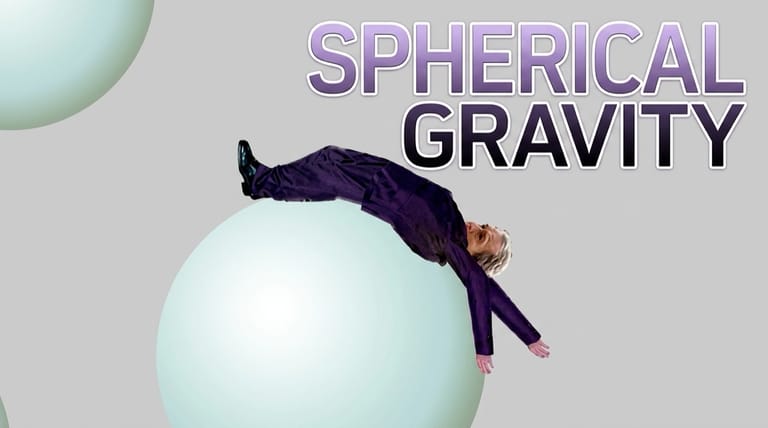
There is no score here, no timer, and nothing to complete. Bush Ragdoll hands you a jointed cartoon figure — a caricature of former US president George W. Bush, labelled in the game as G-Dubya — and a field of bubbles for it to bounce around in, and that is the entire proposition. Calling it a game oversells it. It is a toy, of the kind Flash portals filled up with in the mid-2000s, and it is more interesting when you look at it as one.
A Toy With No Win Condition
The interaction is a single mouse button. Click and drag anywhere on the figure to grab it, move the pointer to swing it, and release to let it fly. Everything after that is the simulation running. The figure tumbles, collides with the bubbles, gets deflected, and keeps going. There is no objective attached to any of it, so what you get out of the toy depends entirely on what you decide is interesting: how far, how long, how many bubbles in a row.
What the Physics Actually Do
The figure is not one object. It is a set of segments — head, torso, upper and lower limbs — chained together by joints that allow rotation but hold the pieces at a fixed distance from one another. When you grab a hand and swing, the force travels down that chain, which is why the limbs whip around so wildly compared to the body.
The other half of the effect is energy. A physically faithful simulation would bleed speed away at every collision and settle within a few seconds. This one loses very little, so a decent throw keeps ricocheting long past the point where a real object would have stopped. That exaggeration is a deliberate choice and it is the reason the toy holds attention at all — a realistic version would be boring in under ten seconds.
Controls
| Action | Control |
|---|---|
| Grab and throw the figure | Left mouse button |
Where Ragdoll Toys Came From
Jointed-figure physics toys were everywhere on Flash sites in the mid-2000s, and there is a practical reason. Two-dimensional constraint solvers were simple enough that a hobbyist could build a working ragdoll in a weekend, and the results were unpredictable enough to be entertaining without any level design, art budget, or scoring system behind them. A recognisable public figure was a common skin for these toys, because it saved having to explain who the character on screen was supposed to be. Bush Ragdoll sits squarely in that tradition, and the developer is not credited on the file.
Making Your Own Fun
Since the toy sets no goals, the usual approach is to invent them:
- Keep the figure airborne for as long as you can without grabbing it again.
- Aim for a chain of bubbles rather than a single hard throw — glancing hits keep the momentum going far longer than a direct one.
- Try small, precise nudges instead of full-arm swings and see how much control you actually have over where it ends up.
- Grab a foot rather than the torso. The chain of joints behaves very differently depending on where the force enters.
Refreshing the page resets everything if the figure ends up somewhere unhelpful.
Frequently Asked Questions
Is there a score in Bush Ragdoll? No. Nothing is counted or recorded — it is a sandbox with no objective attached.
Who is G-Dubya? The nickname the game uses for its caricature of George W. Bush, US president at the time these Flash toys were being made.
How do I start over? Reload the page. There is no reset button because there is no state worth keeping.
Why does the figure keep bouncing instead of settling? The simulation loses very little energy on impact, so momentum persists far longer than it would in a realistic physics model.
Is there an ending? No. It runs until you stop playing with it.