

Injustice Gods Among Us
Loading game…
Injustice Gods Among Us
Strip a fighting game down to three keys — punch, kick, block — and what is left is spacing. Injustice Gods Among Us in this browser form is a fan-built Flash tribute to the DC fighting game, and because it cannot lean on quarter-circle inputs or long combo strings, almost everything that decides a round comes down to whether you were standing at the right distance when you pressed A.
What this version actually is
This is not the console game. NetherRealm Studios released Injustice: Gods Among Us in 2013 as a full retail fighter; what runs here is a much smaller, unlicensed Flash homage that borrows the name and the roster idea. Treat it the way you would treat any of the hundreds of fan-made Flash fighters that grew out of the sprite-and-Newgrounds scene: a short arcade experience made by someone who liked the source material, not an official port.
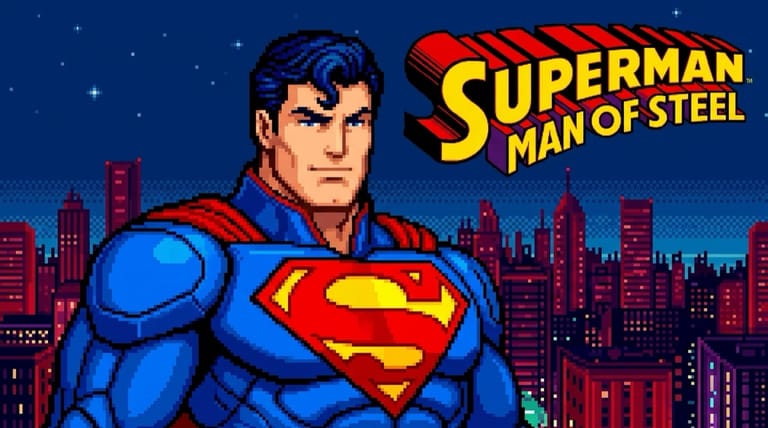
That framing matters for expectations. There are no stage transitions, no super meter cinematics, and no story mode. What there is: a character select screen of recognisable heroes including Superman and The Flash, a ladder of opponents, and a training mode for working out what each character can do.
Rounds, health bars and a very small move list
A match is a straight best-of exchange against the AI. Both fighters share the same basic verbs — a punch, a kick, a block, a jump, a crouch — and each character layers a small number of special moves on top, usually triggered by combining a direction with an attack key. The differences between characters show up in reach, startup speed and how much damage a clean hit does, rather than in complicated input strings.
Because the move list is short, the AI is beatable through pattern recognition. Opponents tend to commit to attacks at predictable ranges, and the block key is generous. A patient player who waits for a whiffed swing and answers it will get further than one who mashes.
Controls
| Action | Control |
|---|---|
| Move left / right | Left Arrow / Right Arrow |
| Jump | Up Arrow |
| Crouch | Down Arrow |
| Punch | A |
| Kick | D |
| Block | S |
Learning the three-key game
- Start in training mode. It exists so you can find each character's special moves without a health bar draining. Ten minutes there is worth several losses in the ladder.
- Find your kick range. Kicks generally reach further than punches and recover slower. Knowing the exact gap where your kick connects but theirs does not is the core skill here.
- Punish, do not initiate. Attacking into a blocking opponent gives up your turn. Hold block, let the AI swing, then answer immediately.
- Use jumps sparingly. Air attacks look decisive and are easy to punish on landing, especially against characters with fast pokes.
- Crouch-block low. Standing block does not always cover everything, and a crouched guard buys you a moment to read what the opponent is doing.
Where it fits in the Flash fighter scene
Browser fighting games were a genre of their own for most of the 2000s and early 2010s, built by hobbyists using licensed characters they had no rights to and distributed on portals that asked no questions. Super Smash Flash, the Mortal Kombat tributes, the endless anime crossovers — they all shared this design language of three or four keys and a flat 2D plane. They were how a lot of people first tried a fighting game at all, years before they touched an arcade stick.
Played today, that history is the appeal. This is a snapshot of what fans could build with Flash's drawing tools and a lot of frame-by-frame patience, and it is a reminder of how much of a fighter's feel survives even when you take away 90% of the inputs.
Frequently Asked Questions
Is this the NetherRealm Injustice game? No. This is a fan-made Flash fighter that shares the name and characters. The 2013 retail game is a separate, much larger product from a professional studio.
Which characters can I play? The select screen features a set of well-known DC heroes, Superman and The Flash among them. Rosters in fan-built fighters like this are small by design — expect a handful rather than a full lineup.
How do I do special moves? Combine a direction with an attack key. The exact combinations vary per character, which is what training mode is for.
Is there a two-player mode? This build is structured around single-player arcade rounds against the AI rather than local versus play.
Why do the animations look stiff compared to the console game? Everything here was drawn as Flash vector animation on a small frame budget. The console fighter used motion-captured 3D models and a team of hundreds.