

Motherload
Loading game…
Motherload
Every trip down is a bet against the fuel gauge. That is the engine that made XGen Studios' 2004 mining game so hard to put down: the ore gets more valuable the deeper you go, the flight home gets longer the deeper you go, and the pod has no way of telling you when you have gone too far. Motherload never gives you a difficulty setting because it does not need one — you set your own difficulty every time you decide whether to drill one more layer.
The Pod, the Fuel Gauge, and the Long Way Home
You control a small mining craft on Mars. Thrusters lift you and let you hover; drilling down, left or right chews through the soil and deposits whatever you find into a cargo hold. Both actions burn fuel, and the tank is the only resource that can end a run outright. Strand yourself underground with an empty tank and the pod is lost along with everything in the hold.
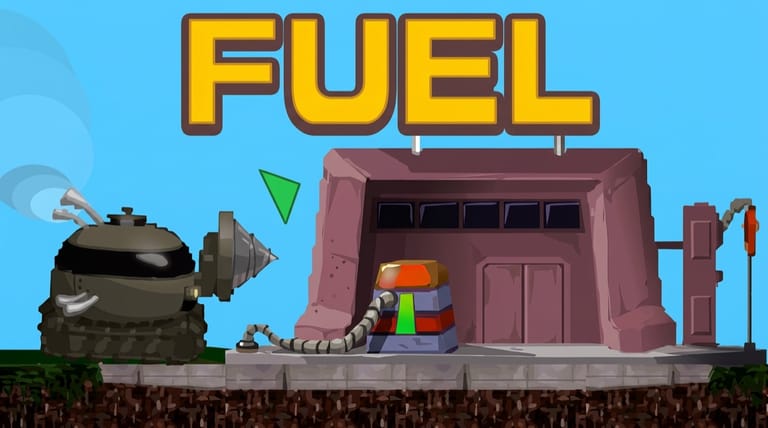
The surface is where the loop closes. There is a processing plant that buys your minerals, a fuel depot that fills the tank, a shop for upgrades, and a repair bay for the damage you accumulate on the way down. A run therefore has a natural shape: descend with a full tank, fill the hold, surface before the gauge gets nervous, sell, refuel, spend the difference on making the next trip go further.
Ore is layered by depth. The shallow soil yields the cheap stuff — ironium, bronzium — while silverium, goldium, platinum and the rare gems only appear far below. That layering is what stops you from grinding safely: the money that pays for a better fuel tank is sitting under a stretch of rock that your current fuel tank cannot reach comfortably.
Upgrades Change What Depth Means
The shop is where the game actually progresses. Each upgrade line changes the calculation rather than just raising a number:
- Fuel tank extends how long a trip can last, which is the most direct answer to the game's core constraint.
- Drill determines what rock you can cut through and how fast. A weak drill wastes fuel grinding at material a better one would pass straight through.
- Cargo bay decides how much you can carry home. There is nothing worse than sitting on a rich seam with a full hold.
- Hull absorbs the damage from falls and hazards, and a bigger hull is what turns a fatal mistake into an expensive one.
- Engine improves how quickly you climb, which quietly saves fuel on every ascent.
Consumable items matter too. Dynamite clears rock without drilling through it, and teleport devices offer a way back to the surface that does not cost a long flight. Carrying a way out is the difference between an ambitious dig and a reckless one.
Controls
| Action | Control |
|---|---|
| Drill left / down / right | A / S / D, or Left / Down / Right arrow keys |
| Fly upward | W, Up arrow key, or hold the left mouse button |
Hazards Below
The deeper layers are not just further away, they are actively hostile. Gas pockets detonate when disturbed. Pockets of lava will wreck an unprepared hull. Loose rock falls when you undercut it, and a falling rock lands on the pod that dislodged it. None of these are unfair — each one is visible or telegraphed if you are paying attention — but they punish the exact behaviour the game encourages, which is drilling downwards quickly without looking around.
Practical habits that keep runs alive:
- Turn back at half a tank. The climb home is roughly as expensive as the descent, and hovering while you decide what to do costs fuel too.
- Dig in a staircase, not a shaft. Diagonal descents give you walls to rest against and make it far easier to climb back out.
- Sell before you upgrade, upgrade before you dig. Going down with a full hold and no spare cash is how good runs get thrown away.
- Leave the deep gems until the pod is ready. They are worth a fortune and they are surrounded by everything that can kill you.
Motherload is a good example of a Flash game whose design outlived its platform. The dig-sell-upgrade loop it popularised has been reused constantly since, and playing the original makes it obvious why: the tension is generated entirely by one gauge and one direction of travel.
Frequently Asked Questions
Who made Motherload? XGen Studios, a Canadian developer, released it in 2004. A paid, expanded edition followed the free browser version.
What happens if I run out of fuel underground? The run ends and you lose the pod along with the cargo you were carrying. Watching the gauge and turning back early is the whole discipline of the game.
Where do I sell what I mine? At the mineral processing plant on the surface. You have to physically fly back up — there is no remote selling — which is why cargo capacity and fuel are so tightly linked.
Which upgrade should I buy first? A larger fuel tank early on pays for itself fastest, because every other upgrade is worthless if you cannot reach the depths where the valuable ore is.
Is there an ending, or does it dig forever? The dig bottoms out. There is a final encounter waiting at the deepest point, and reaching it requires a heavily upgraded pod.