

Grow Valley
Loading game…
Grow Valley
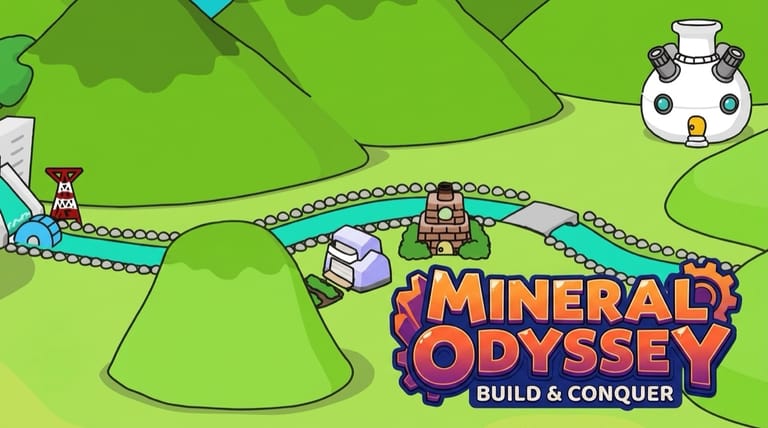
Grow Valley starts you with an empty stretch of land between hills and a row of icons that will eventually turn it into something inhabited. It is the most demanding of Eyezmaze's ordering puzzles, not because any individual step is hard, but because the item list is long enough that intuition stops being sufficient. This is the entry where people start writing things down.
From Bare Ground to a Working Settlement
Each turn you commit one item to the valley. It animates, the scene changes, and the change is permanent. Over the course of a run the valley acquires terrain work, water, vegetation, buildings and eventually the infrastructure of a place that supports people — all of it drawn in the same soft, unhurried style, with music that makes the whole thing feel like watching a diorama assemble itself.
The valley's shape matters more than it first appears. Because the setting is a basin rather than a flat plain, the way water and elevation get handled early determines what the ground can hold later. Items that arrive after their supporting terrain is settled reach forms you will not see any other way, which is the payoff the game is quietly withholding from you on a first run.
Controls
| Action | Control |
|---|---|
| Commit an item to the valley | Left mouse button |
A single click per turn is the entire control scheme, and the game never asks you to move quickly. Every bit of difficulty is in the decision, not the execution.
Why Guessing Does Not Work Here
The arithmetic is the honest explanation. A puzzle with a long list of one-use items has a number of possible orderings that grows factorially — a set of eight has over forty thousand arrangements, and each extra item multiplies that further. Nobody is exhausting that by clicking around, and the game knows it. Every animation is therefore designed to be evidence.
What makes an ordering correct is that each item shows up when the thing it needs already exists and the thing that needs it has not yet arrived. That window is narrow for a handful of items and wide for most, which is why partial solutions feel so close: you can get eighty per cent of a valley by accident and then stall for several runs on two placements that belong in the opposite order.
Keeping Notes Instead of Restarting Blindly
A workable method, in order:
- Log the sequence you clicked. Numbers next to icon names is enough. Without this, run three is indistinguishable from run one.
- Mark the long animations. A long, multi-part animation means a placement triggered something already on the field. Those positions are probably right; leave them alone.
- Mark the flat ones. An item that appears with almost no reaction was placed outside its window. These are your variables.
- Change one flat item per run. Move it two or three slots and compare. Changing several at once tells you nothing about which change helped.
- Watch the final state, not just the ending. How developed each part of the valley looks is a more precise signal than whether you reached an ending at all.
Four or five deliberate runs down this path will get you further than twenty impatient ones. Published orders exist for every entry in the series; using one on your first attempt removes the only thing this game contains.
Its Place Among Eyezmaze's Releases
The Grow puzzles were made by a Japanese developer working under the name On, published free on his own site through the 2000s, and passed between players by link rather than by any storefront. Grow Valley is the one usually recommended to people who finished a shorter entry and wanted more of it — the same one-click interface stretched to something closer to a full puzzle game, with more items, more chains and a longer arc from bare ground to finished landscape.
It also demonstrates how well this kind of design travels. No timer, no failure screen, no score to chase and nothing to install.
Frequently Asked Questions
Is Grow Valley harder than the other Eyezmaze puzzles? It is generally the longest, with more items and more dependency chains, so it takes more attempts and benefits far more from written notes.
Can I fail Grow Valley? There is no defeat screen. A poor ordering simply produces a less developed valley and skips the sequences a better ordering would have triggered.
How do I know if a placement was correct? Length and complexity of the animation. Multi-stage reactions mean you fed something that was already there; a brief animation means the item had nothing to work with.
How many items are used in a run? Each icon is placed exactly once, so a run is as long as the item list and the ordering is the only thing that differs between attempts.
Does the game save my progress between sessions? Treat each run as self-contained. If you want to continue an investigation later, keep your own written record of the orders you have already tried.
Which entry should I play if this one feels too long? The Nano shorts on the same site use the same click-to-place idea in a few minutes, and Grow Tower trims the item list down to a handful.