

Mahjong Tower
Loading game…
Mahjong Tower
Stack the same 144 tiles differently and you get a different game. That is the premise Mahjong Tower 2 runs on: the pairing rule never changes, but the arrangements do, and an arrangement that piles tiles high behaves nothing like one that spreads them wide. Choosing a layout here is closer to choosing a difficulty than choosing a skin.
Height Is the Whole Problem
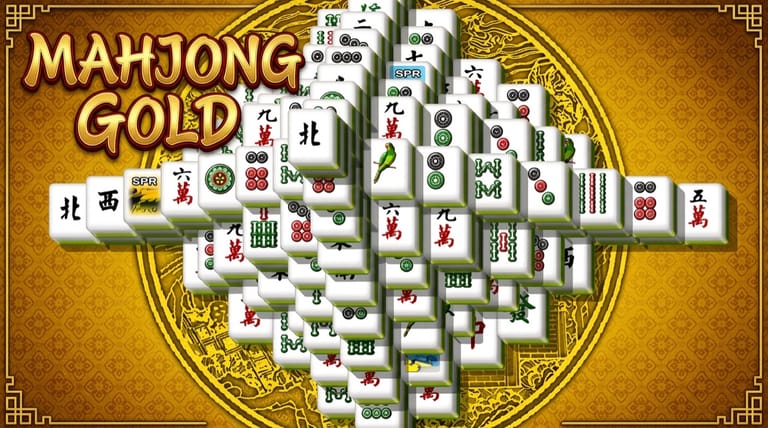
In a flat arrangement, nearly everything is legal and the challenge is spotting matches. Add layers and the maths inverts. A tile with another tile resting on it cannot be taken at all, so a five-high column locks four tiles behind one. Tall layouts therefore present you with a small number of legal moves and a large number of consequences, and the game becomes about which cap you remove rather than which pair you can see.
This also changes what a mistake looks like. On a wide board, a bad pair costs you a little flexibility. On a tower, a bad pair can bury a tile for the rest of the run, because the only route to it was the pair you just spent. The pace slows down accordingly — a tall layout played quickly is a tall layout played badly.
Choosing a Layout
The selection screen is worth treating seriously rather than clicking past.
- Wide, shallow arrangements are the friendliest. Lots of legal tiles at once means lots of recovery options, and they are the right place to warm up or to play while half-watching something else.
- Tall, narrow arrangements are the strategic ones. Few legal moves, heavy consequences, and the strongest sense of solving something. These reward planning two or three pairs ahead.
- Symmetrical shapes hide a trap: the mirror image of a tile's position does not mean the mirror tile matches it. Symmetry helps you navigate the board and tells you nothing about the faces.
- Irregular shapes usually have one or two chokepoints — a column or bridge that everything else depends on. Find it in the first thirty seconds and prioritise it.
Because every layout uses the same rules and the same set, switching between them is a genuinely useful way to improve. Learn to read matches on a shallow board, then take that reading speed to a tall one where the thinking matters.
Controls
| Action | Control |
|---|---|
| Highlight a tile | Click or tap it |
| Pair it with a second tile | Click or tap the matching tile |
Clicking a non-matching tile moves the highlight to that tile rather than rejecting the click, so you can browse the board without deselecting first.
Digging Down a Stack Safely
A workable method for tall boards:
- Survey before you touch anything. Identify the tallest point and count how many tiles are stacked underneath it. That column is your project for the next several moves.
- Peel caps in pairs where possible. Two top tiles that match each other are the best move in the game, because you gain two exposures for one action.
- Do not spend a design you can see four of. If all four copies of a face are currently exposed, taking two costs nothing. If only two are exposed and the other two are buried in different columns, taking the exposed pair may strand both.
- Save the flat outskirts. Tiles lying alone at the base of the arrangement stay legal permanently. They are your endgame material, and cashing them in early is the most common way runs collapse.
- Track what has left the board. Once a design is fully cleared, any assumption you were making about a future match involving it is void.
The reward for this discipline is that tall layouts finish cleanly instead of dribbling out into a dozen unmatchable leftovers, which is the failure state that makes people give up on stacked mahjong entirely.
Frequently Asked Questions
Do the different layouts change the rules? No. Every arrangement uses the same selection rule and the same tile set. What changes is how many tiles are legal at any moment, which is what makes some layouts far harder than others.
Which layout should a beginner start on? A wide, low one. More simultaneously legal tiles means more chances to recover from a poor pairing while you are still learning to read the board.
Why can't I take a tile that has nothing on top of it? Both of its long sides are probably blocked. A tile needs a clear left or right edge as well as an empty top before it can be lifted out.
Does highlighting a wrong tile cost me anything? No. Clicking a tile that does not match simply moves the highlight, so exploring the board is free.
Is a tall layout always harder than a wide one with the same tile count? Generally yes. Height converts tiles into blockers, and fewer legal moves means each choice removes more of your future options.